
WSSU experiences significant increase in graduate rates for male students
Winston-Salem State University’s four-year graduation rate for male students increased by 10 percentage points year over year, a notable gain that outpaces national trends and reflects the impact of intentional, coordinated student success strategies.
Nationally, male students, particularly at HBCUs, graduate at significantly lower rates than their female peers, with reported achievement gaps ranging from 7 to 11 percentage points, depending on the source.
At WSSU, that gap has historically exceeded 10 points. This year, it narrowed dramatically to just 1.5 percentage points, placing the university well ahead of national norms for gender equity in graduation outcomes.
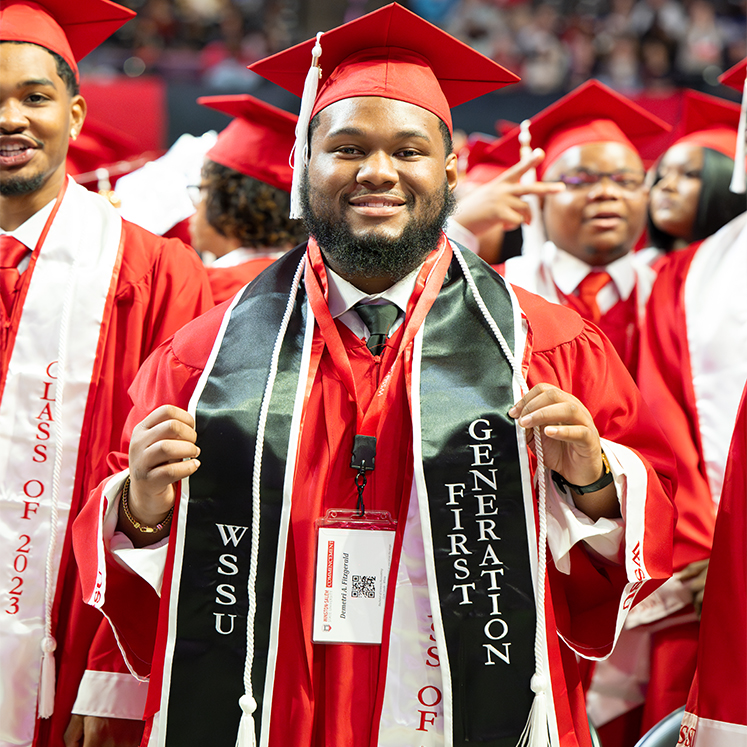
This progress was driven by a university-wide effort to address challenges in male student persistence through targeted, high-touch engagement. Associate Provost for Academic Strategy and Institutional Effectiveness, Dr. Tony Artimisi, identified academic programs with the highest enrollment of male students and worked collaboratively with faculty, advisors and administrators to implement strategies designed to improve retention and on-time graduation.
High-touch engagement strategies such as increased check-ins, mentorship and personalized guidance played a central to the improvement. These efforts encouraged accountability, reinforced belonging and helped students navigate academic and personal challenges more effectively.
“It was incredibly rewarding to see the level of collaboration across the university dedicated to supporting our male students’ success,” Artimisi said. “This shared commitment not only produced measurable gains this year but also positioned WSSU as a leader in addressing a national challenge and building a strong foundation for continued progress.”
In addition to increased engagement with male students, technology also played a key role. The Amon Chat Bot campaign helped identify students who needed additional support and enabled timely follow-up from academic departments and campus partners, ensuring students were connected to the right resources when they needed them.
Departments implemented discipline-specific strategies to keep students on track. The business administration department moved more courses back into R.J. Reynolds Hall to strengthen faculty-student interaction and build academic community. The exercise science department introduced more structured courses and communication channels, allowing faculty to collectively monitor student progress and intervene early. Across departments, faculty increased informal contact with students to offer encouragement and reinforce academic momentum.
The initiative involved faculty and leadership from business administration, computer science, exercise science and sport management, with support from the College of Arts and Sciences, College of Business and Entrepreneurship, School of Health Sciences and University College. Advisors and department chairs regularly reviewed progress data to identify students who might need additional assistance and ensured outreach occurred through tutoring, supplemental instruction, counseling services and career services.
Mentorship and faculty accessibility made a measurable difference. Students responded positively to consistent communication and genuine interest in their success. Many expressed their appreciation simply for being contacted, which underscores the research that shows proactive outreach is a critical factor in sustaining motivation and academic performance for male students.